OPTP 483 Wooden Wobble Balance Board and Stability Trainer for Physical Therapy Review (2026)
Updated September 21, 2026 · Research-based review
Our verdict
Good for people who want a balance board built to the standard physical therapy clinics actually use rather than a general fitness accessory. OPTP's reputation among therapists is the main strength here, and the trade-off is a simpler, clinic-style package without the bundled bands or workout videos some fitness-branded boards include.
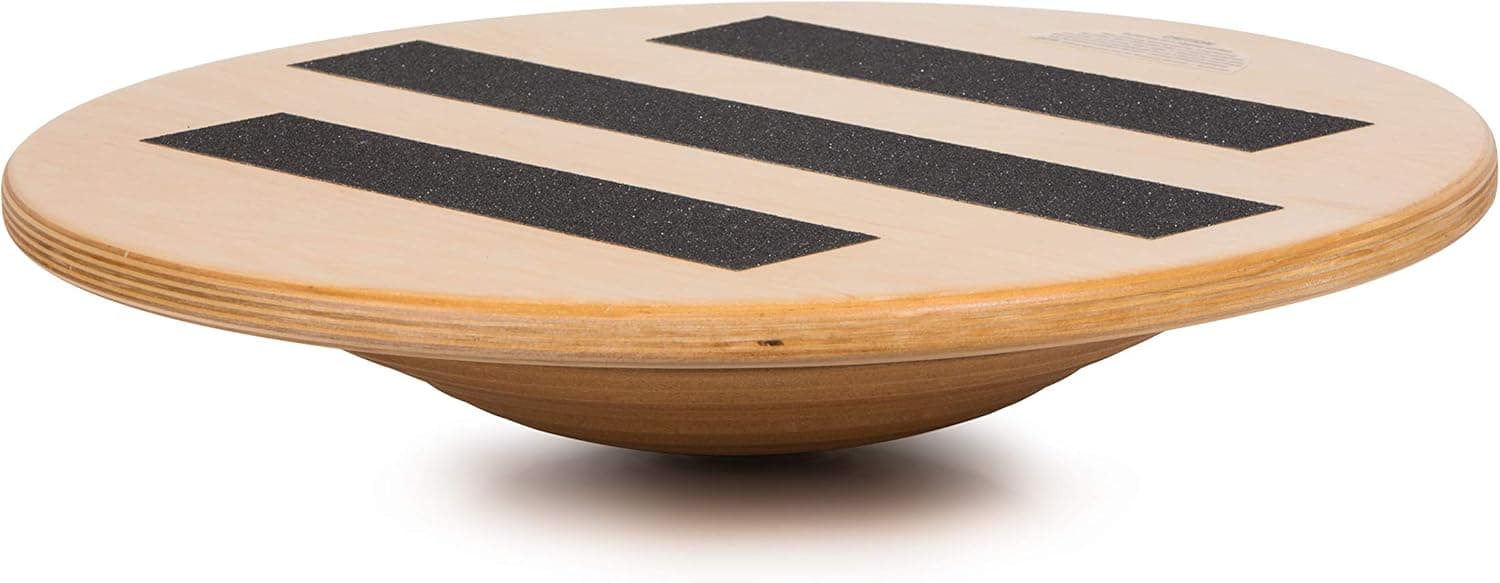
OPTP's 483 wooden wobble board and stability trainer, a therapy-focused board from a clinic supply brand.
Price range: See on Amazon
What we liked
- + OPTP makes gear widely used by physical therapists
- + Stability trainer design suits careful balance rehab
- + Wooden build is solid and holds up to regular clinic-style use
Trade-offs
- - Clinic-style design lacks extras like bands or videos
- - Pricier than general fitness wobble boards
What it is
This is a wooden wobble balance board from OPTP, a company whose equipment is widely used and chosen by physical therapists, chiropractors, athletic trainers, and coaches rather than sold primarily through general fitness marketing. As a wobble board, it tilts on a rounded base underneath the platform, requiring the user to make small, constant corrections to stay balanced, which is the basic mechanism used across this category to train ankle stability, proprioception, and core control. The construction is solid wood rather than plastic or foam, a build choice consistent with equipment meant to hold up to repeated daily use in a clinic setting rather than occasional home use. It is sold as a stability trainer for physical therapy, which reflects its intended use in structured rehab and balance programs rather than as a general home gym novelty item.
Setup and daily use
There is no assembly needed; the board is used as a single wooden unit, set on a flat, non-slip surface before stepping on. Because it is a true wobble design rather than a rocker that only tilts in one direction, the platform can move in multiple directions at once, which generally makes it more demanding and more versatile for balance training than a simple one-axis rocker board. Typical use involves standing on the board while performing small controlled movements, holding a static balance position, or combining it with other exercises like squats or reaches to add an unstable surface challenge. Being solid wood, it does not require any maintenance beyond occasional wiping down and storing it somewhere dry, and it does not include electronics, batteries, or anything that needs charging or replacing over time.
Who it suits
This board suits people doing structured ankle, knee, or general balance rehabilitation who want equipment built to the same standard used in physical therapy clinics, as well as athletes and coaches who want a durable, no-frills balance tool for training programs. Because OPTP's equipment is a known quantity in clinical settings, it also suits anyone who prefers a brand with an established professional reputation over a newer fitness brand making similar claims. People who want a board that comes bundled with workout videos, resistance bands, or a built-in exercise app should know that this is a simpler, clinic-style package focused on the board itself rather than an accessory bundle, so those extras would need to come from a different source or product.
Where it falls short
Compared to some fitness-branded wobble boards that bundle in resistance bands, instructional videos, or an app, this board is a more basic package built around the wobble platform alone, so buyers wanting extra guided content included in the box may need to look elsewhere or supplement with outside resources. It also tends to be priced higher than general fitness wobble boards without the clinical background, which is a reasonable trade for buyers who value the professional pedigree but a real consideration for anyone comparing purely on price. As with any wobble board, it requires a clear, flat area to use safely, and beginners with significant balance issues should start with support nearby, such as a wall or chair, rather than jumping straight into unsupported use.
Bottom line for recovery routines
For anyone doing balance or ankle rehab work who wants equipment with a real clinical pedigree behind it, this OPTP board is a solid, no-frills choice built from solid wood rather than lighter materials, matching the kind of gear used in physical therapy settings. It is best suited to people who already know roughly what exercises they want to do with it, since the package does not include instructional extras like bands or videos. Buyers mainly looking for a bundled, guided fitness product with add-ons should compare against fitness-branded alternatives, while those who want a durable, clinic-grade board on its own will likely find this a reasonable fit.
Frequently asked questions
Is this balance board suitable for physical therapy?
Yes, OPTP is a brand widely used by physical therapists, chiropractors, and athletic trainers for balance and rehab work.
What is the board made of?
It is made from solid wood rather than foam or plastic, built for repeated, durable use.
Does it come with exercise videos or bands?
No, it is a simpler clinic-style package focused on the board itself, without bundled bands or instructional videos.
Does it tilt in one direction or multiple directions?
It is a true wobble design that can move in multiple directions at once, rather than a single-axis rocker board.
Prices change often, so check the current price and availability on Amazon.
Check price on AmazonRecovery Studio Hub may earn a commission from the link above.